Industrial Crushers Information: Learn About Crushing Methods, Systems and Equipment
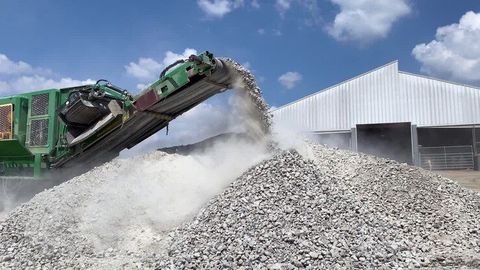
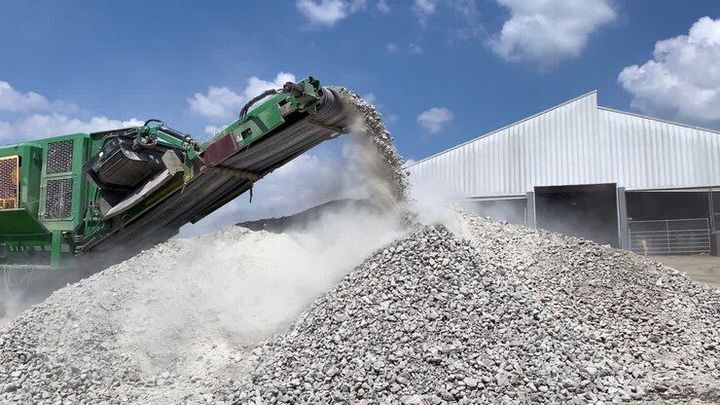
Industrial crushers are machines designed to reduce large pieces of rock, minerals, construction materials, and other solid substances into smaller and more manageable sizes.
They are widely used in mining, quarrying, recycling, construction, and several processing industries.
Understanding industrial crushers involves learning about crushing methods, crusher types, equipment components, operating systems, maintenance practices, and material-handling requirements. The appropriate crushing approach depends on factors such as material hardness, feed size, required output size, moisture, and processing capacity.
Context
Industrial crushing is a mechanical process in which force is applied to a material until it breaks into smaller pieces. Different crushing systems use different forms of mechanical action, including compression, impact, and abrasion. The objective is generally to achieve a specified particle size for subsequent processing or handling.
The history of crushing equipment is closely connected with mining and construction. Earlier systems relied heavily on manual labor and simple mechanical devices. Modern industrial crushers use engineered components, automated controls, monitoring systems, and safety mechanisms to improve process consistency.
Common types of industrial crushers include:
- Jaw crushers
- Cone crushers
- Impact crushers
- Gyratory crushers
- Roll crushers
- Hammer crushers
- Vertical shaft impact crushers
A crushing circuit can contain one or several crusher stages. Primary crushing usually handles the largest feed material. Secondary and tertiary stages can further reduce particle size when a finer product is required.
| Crusher type | Main crushing action | Common application |
|---|---|---|
| Jaw crusher | Compression | Primary crushing |
| Cone crusher | Compression | Secondary and tertiary crushing |
| Impact crusher | Impact | Aggregates and recycling |
| Gyratory crusher | Compression | Large-scale mining |
| Roll crusher | Compression | Mineral and industrial materials |
| Hammer crusher | Impact | Selected soft and medium-hard materials |
Importance
Industrial crushers play an important role because many raw materials cannot be processed efficiently in their original size. Size reduction can make materials easier to transport, screen, separate, blend, or process in later stages.
Crushing equipment affects several groups, including mining operators, quarry personnel, construction companies, recycling facilities, equipment engineers, maintenance teams, and environmental specialists.
The selection of a crushing system can depend on several technical factors:
- Material hardness and abrasiveness
- Maximum feed size
- Desired product size
- Required processing capacity
- Material moisture
- Available installation space
- Energy requirements
- Wear characteristics
- Screening and conveying arrangements
Crusher configuration can also influence the final particle-size distribution. For example, a primary crusher may produce relatively large fragments, while additional crushing and screening stages can create smaller and more uniform material.
Proper maintenance is also important. Wear components such as jaw plates, liners, blow bars, and other internal parts gradually deteriorate during operation. Regular inspection helps identify abnormal wear, blockages, vibration, or other operating issues before they affect the wider crushing circuit.
Recent Updates
Recent developments in industrial crushing increasingly involve automation, sensors, remote monitoring, and data-based process management. Modern control systems can monitor operating conditions such as power consumption, temperature, vibration, pressure, and equipment status.
Digital monitoring can help operators understand changes in crusher performance and identify maintenance requirements. Some systems also integrate crusher controls with screens, feeders, conveyors, and other equipment to coordinate the overall process.
Another important development is the use of automation to reduce unnecessary manual intervention. Automated feed control can help maintain more consistent operating conditions by adjusting material flow according to measured system parameters.
Environmental considerations are also influencing crushing operations. Dust-control systems, noise-reduction measures, water-management practices, and improved energy efficiency are increasingly considered when designing and operating crushing facilities.
Recycling is another significant area of development. Crushers are used to process concrete, asphalt, demolition materials, and other recoverable materials. Proper separation and processing can help transform suitable waste streams into materials that can be used in subsequent applications.
Laws or Policies
Industrial crusher operations may be subject to different laws and regulatory requirements depending on the country, state, location, material being processed, and type of facility.
Environmental rules can address particulate emissions, dust, noise, wastewater, waste handling, land use, and other effects associated with industrial activity. Workplace safety requirements can also cover machine guarding, emergency stops, maintenance procedures, personal protective equipment, and employee training.
In India, industrial facilities may need to consider requirements administered by organizations and authorities such as the Ministry of Environment, Forest and Climate Change, Central Pollution Control Board, State Pollution Control Boards, and Directorate General Factory Advice Service & Labour Institutes, depending on the activity and jurisdiction.
Important regulatory areas may include:
- Environmental permissions and pollution controls
- Workplace health and safety
- Dust and particulate management
- Noise management
- Hazardous material handling where applicable
- Industrial waste management
- Electrical and machine safety
Requirements can vary significantly between facilities. Operators should consult the applicable national, state, and local authorities and use current versions of relevant regulations rather than relying on general summaries.
Tools and Resources
Reliable technical resources can help readers understand industrial crushers, crushing methods, equipment specifications, and regulatory requirements.
Useful resources include government environmental agencies, occupational safety authorities, engineering standards organizations, technical publications, equipment manuals, and educational material from universities or professional engineering organizations.
When evaluating a crushing system, technical documentation can provide information about feed limitations, operating ranges, maintenance intervals, wear components, power requirements, and recommended installation practices.
Useful information sources may include:
- Government environmental and workplace-safety portals
- Engineering standards databases
- Technical manuals and equipment documentation
- Mining and quarrying publications
- University engineering resources
- Recycling and materials-processing guidance
- Equipment maintenance checklists
A basic crusher assessment can begin with measurements of feed material size, material properties, required product size, operating conditions, and downstream screening requirements. These factors provide a technical basis for understanding how a crushing system may be configured.
FAQs
What are industrial crushers used for?
Industrial crushers reduce large pieces of material into smaller particles. They are used in applications such as mining, quarrying, construction-material processing, and recycling.
What are the main types of industrial crushers?
Common types include jaw, cone, gyratory, impact, roll, hammer, and vertical shaft impact crushers. Each type uses a different mechanical principle and is suited to particular material and size-reduction requirements.
How does a jaw crusher work?
A jaw crusher generally uses a fixed jaw and a movable jaw. Material enters the crushing chamber and is reduced through compression as the movable jaw approaches the fixed jaw.
What factors affect crusher selection?
Important factors include material hardness, abrasiveness, moisture, feed size, required output size, processing capacity, energy requirements, and the configuration of downstream equipment.
Why is crusher maintenance important?
Regular inspection and maintenance can help identify wear, blockages, abnormal vibration, lubrication issues, and other operating conditions. Maintaining equipment according to technical documentation can support safe and consistent operation.
Conclusion
Industrial crushers are essential size-reduction machines used across mining, quarrying, construction, recycling, and material-processing applications. Understanding crushing methods, crusher types, equipment components, and process requirements helps explain how different systems are designed for different materials and operating conditions.
Modern crushing systems increasingly incorporate automation, sensors, monitoring technologies, and environmental controls. Regulatory requirements also remain an important consideration, particularly for workplace safety, dust, noise, emissions, and waste management.
For anyone studying industrial crushers, it is useful to begin with the fundamentals of crushing mechanisms and then examine individual equipment types. Technical manuals, government resources, engineering references, and maintenance documentation can provide additional information for specific applications.
The most appropriate crushing arrangement depends on the material and process requirements rather than a single universal configuration. Careful consideration of feed characteristics, desired particle size, operating conditions, safety requirements, and downstream processing can help provide a clearer understanding of industrial crushing systems.