Overview of V-Blender Features and Their Industrial Applications
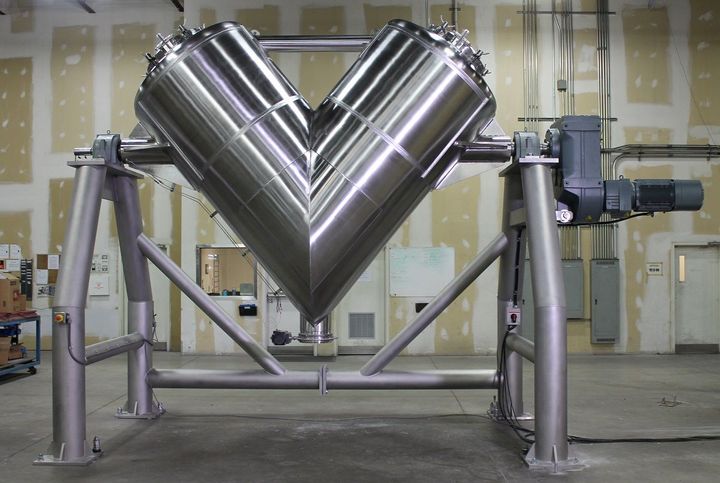
V-blenders, also known as V-cone blenders, are industrial mixing machines designed for blending dry powders and granules. They consist of two cylindrical sections joined in a “V” shape, which rotates to create a tumbling motion. This design promotes uniform mixing without high shear or heat generation, making the V-blender a preferred choice in industries where gentle blending is essential.
V-blenders exist to solve the challenge of achieving homogenous mixtures of dry materials, especially when particles differ in size, shape, or density. The machine’s geometry helps distribute materials consistently and reduces the risk of degradation, contamination, or excessive friction during mixing.
They are widely used in pharmaceuticals, chemicals, nutraceuticals, food processing, and metallurgy, serving as a reliable solution for batch-based powder blending.
Importance – Why V-Blenders Matter Today
V-blenders remain widely used because they provide accurate, contamination-free mixing with relatively low maintenance needs. As industries increasingly prioritize quality, precision, and safety, V-blenders continue to play an essential role.
Who Benefits?
-
Pharmaceutical manufacturers
-
Food and beverage companies
-
Chemical processors
-
Nutraceutical and supplement producers
-
Powder-based materials industries
Key Problems They Help Solve
-
Achieve uniform mixing of delicate powders
-
Prevent segregation of mixed ingredients
-
Maintain product integrity without overheating
-
Support batch standardization for regulated industries
-
Reduce operational downtime due to simple operation and cleaning
In sectors such as pharmaceuticals, consistent powder mixing is critical for dosage accuracy and product reliability, making the V-blender a machine of continued relevance.
Recent Updates – Trends and Advancements (2024–2025)
Manufacturers have introduced several improvements to enhance efficiency, compliance, and automation.
2024 Automated Control Panels
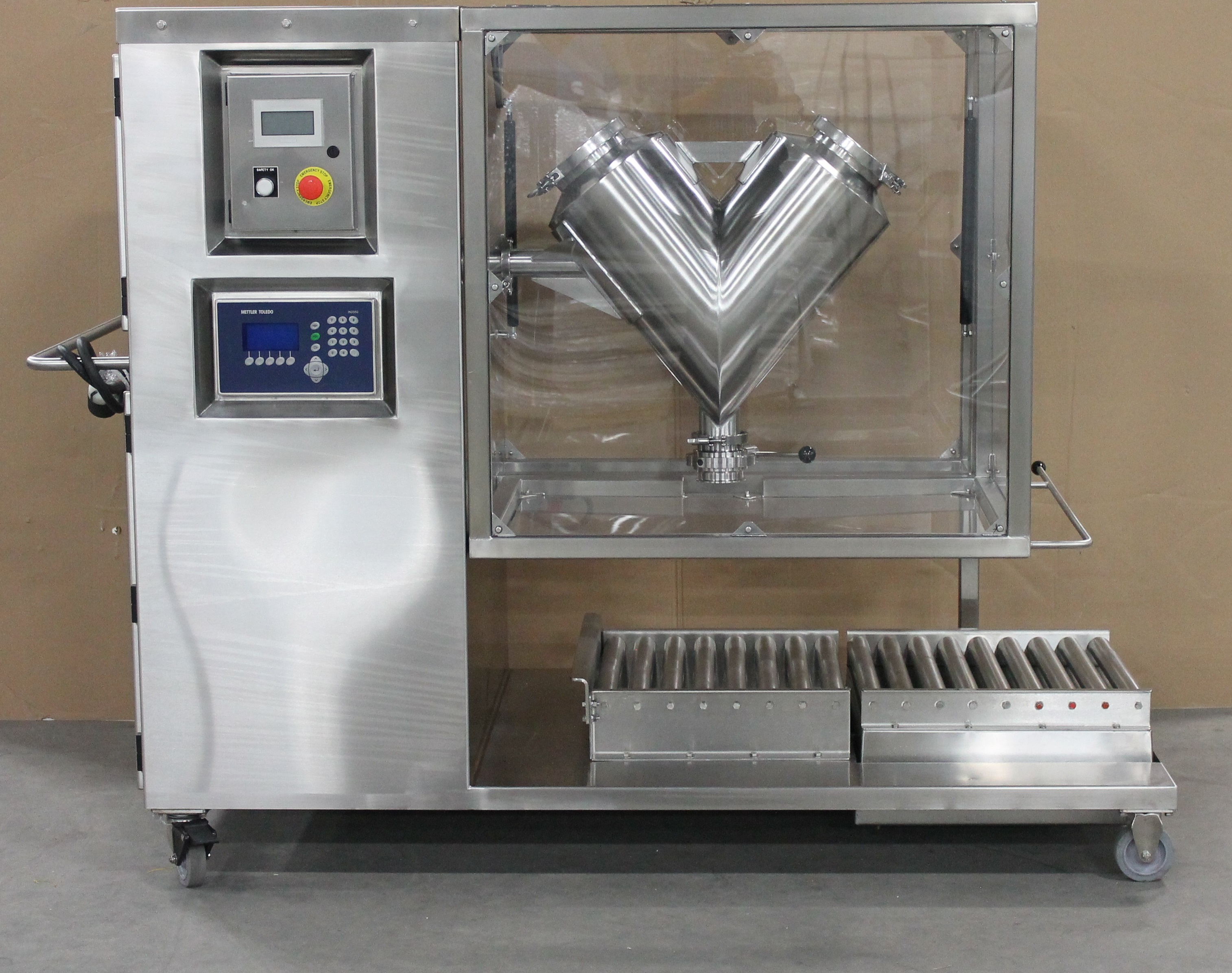
Modern V-blenders increasingly include PLC-based systems with touchscreens for real-time monitoring of speed, mixing time, and load distribution.
Improved Safety Interlocks (2024)
Updated designs include enhanced interlocks that prevent operation while doors are open, improving operator safety.
Integration With IoT Platforms (2025)
Some new models support data logging, remote monitoring, and predictive maintenance to help facilities track performance and schedule servicing proactively.
Enhanced Cleanability Features
CIP/SIP-compatible surfaces and sanitary finishes have become more common, especially in pharmaceutical and food applications.
Energy-Efficient Motor Systems
Recent advancements focus on reducing power consumption while maintaining consistent rotational speed, supporting sustainability goals.
Advanced Intensifier Bars
For industries requiring more aggressive mixing, upgraded intensifier bars improve blending efficiency without increasing heat or pressure.
These updates reflect growing expectations for automation, precision, hygiene, and energy efficiency across industrial mixing operations.
Laws or Policies – Regulations Affecting V-Blender Use
Although regulations vary by country, several key industry standards commonly affect the installation and operation of V-blenders.
Pharmaceutical Compliance
Pharmaceutical facilities typically adhere to:
-
Good Manufacturing Practices (GMP)
-
FDA regulations (for US-based production)
-
EU EMA guidelines
-
WHO GMP protocols
V-blenders used in these environments must ensure batch traceability, hygienic design, and validated cleaning procedures.
Food Industry Standards
V-blenders used for food mixing must comply with:
-
FDA food-contact material standards
-
FSMA (Food Safety Modernization Act)
-
HACCP guidelines
-
EU Food Safety Regulations
Stainless steel construction and sanitary polishing are often required.
Workplace Safety Regulations
Common regulations include:
-
OSHA machine safety guidelines
-
Noise and vibration control requirements
-
Electrical safety certifications (CE, UL, BIS depending on region)
Environmental and Energy Standards
In regions promoting industrial sustainability, companies may follow:
-
Energy-efficient motor certification
-
Waste disposal guidelines for powder residue
-
Emission regulations where dust management is required
These regulatory frameworks ensure safe operation, long equipment lifespan, and consistent product quality.
Tools and Resources – Useful Support for V-Blender Operations
Several tools, calculators, and resources can help improve blending accuracy, maintenance, and production planning.
Helpful Tools
-
Powder flow testers
-
Particle size analysis equipment
-
Torque and load sensors
-
Safety interlock testing tools
-
Vibrational analysis meters
Software and Apps
-
Batch mixing calculators
-
PLC monitoring applications
-
IoT-based maintenance platforms
-
Quality control data-logging tools
-
Material compatibility databases
Online Resources
-
Manufacturer user manuals
-
GMP compliance guides
-
V-blender capacity calculation charts
-
Industry technical forums
-
Training videos for safe operation and cleaning
Templates and Operational Documents
-
Standard operating procedure (SOP) templates
-
Maintenance checklists
-
Batch record templates
-
Validation documentation guides
These tools help operators achieve consistent results and maintain safety and regulatory compliance.
V-Blender Features and Their Industrial Applications
Understanding the core features of V-blenders helps clarify why they are preferred for specific manufacturing environments.
Key Features of V-Blenders
1. V-Shaped Chamber
The geometric shape allows two material streams to converge and divide repeatedly, creating random tumbling for even mixing.
2. Gentle Blending Action
Ideal for fragile powders and granules because it does not crush or fracture particles.
3. Uniform Mixing
Achieves homogeneous blends even for materials with varied densities.
4. Low Heat Generation
Suitable for sensitive materials prone to thermal degradation.
5. Simple Loading and Unloading
The open design makes charging, discharging, and cleaning easier.
6. Optional Intensifier Bar
Adds extra mixing capability when dealing with sticky, clumpy, or dense powders.
7. Wide Capacity Range
Available from small lab models to large industrial units handling hundreds of litres.
8. Easy Maintenance
Fewer moving parts and smooth surfaces reduce cleaning time and operational downtime.
Industrial Applications of V-Blenders
Pharmaceuticals
-
Blending active pharmaceutical ingredients (APIs)
-
Mixing excipients like lactose or starch
-
Preparing powdered formulations for tablets or capsules
Food and Nutraceuticals
-
Vitamin powder blends
-
Protein mixes
-
Dry seasoning combinations
Chemical Processing
-
Pigment mixing
-
Fine chemical blends
-
Fertilizer powders
Metallurgy
-
Powdered metal blending for sintering or coating applications
Cosmetics
-
Talcum powder
-
Face powder ingredients
-
Mineral blends
Laboratories & R&D
-
Formulation testing
-
Small-batch prototype mixing
Comparison Table: V-Blender Strengths
| Feature | Benefit | Best Industry Use |
|---|---|---|
| Gentle mixing | Protects fragile particles | Pharmaceuticals, nutraceuticals |
| V-shape geometry | Enhances blending uniformity | All powder-based industries |
| Low heat | Maintains material properties | Chemicals, food processing |
| Optional intensifier bar | Handles tough materials | Chemicals, metallurgy |
| Simple cleaning | Shorter downtime | Food, pharma |
FAQs
What types of materials blend best in a V-blender?
Dry powders and free-flowing granules mix best due to the low-shear, tumbling action.
Is a V-blender suitable for liquid mixing?
No. V-blenders are primarily designed for dry material blending and cannot process liquids effectively.
What maintenance does a V-blender require?
Routine cleaning, inspection of bearings, lubrication of moving parts, and regular validation of safety interlocks.
How long does blending take in a V-blender?
Mixing times vary but typically range from 5 to 20 minutes depending on material type, batch size, and required uniformity.
What is the role of an intensifier bar?
It helps break lumps and increase mixing efficiency for dense or moist powders.
Final Thoughts
V-blenders remain one of the most practical and effective solutions for powder mixing across multiple industries. Their gentle blending method, efficient geometry, easy maintenance, and compatibility with strict regulatory environments make them valuable tools for both large-scale manufacturing and small-batch production. With ongoing advancements in automation and hygiene design, V-blenders continue to evolve and support modern industrial needs.