Industrial Power Systems Overview: Discover How Modern Power Networks Support Industry
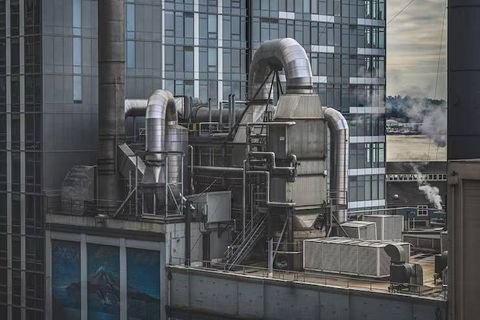
Industrial power systems are the electrical networks that generate, transmit, distribute, and control electricity for factories, processing plants, warehouses, data centers, transportation facilities, and other industrial environments. They connect equipment and processes to a dependable electrical supply while managing voltage, current, protection, and power quality.
Modern industrial power systems combine traditional electrical infrastructure with automation, monitoring, digital controls, renewable generation, energy storage, and advanced protection technologies. Understanding their basic structure helps explain how electricity moves through industrial facilities and how operators manage electrical risks and changing energy requirements.
Context
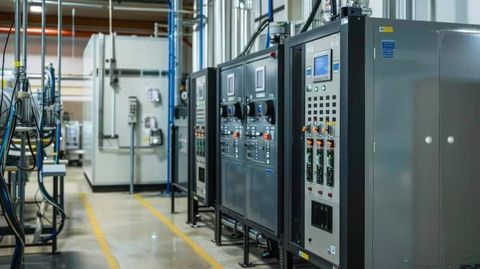
An industrial power system generally begins with an incoming electrical supply from a utility grid or another generation source. Electricity then passes through equipment such as transformers, switchgear, circuit breakers, distribution panels, cables, and control systems before reaching industrial loads.
Large facilities may also have generators, solar photovoltaic systems, battery energy storage, or other distributed energy resources. These components can work together with the utility connection to maintain electrical continuity and manage changing demand.
The main parts of an industrial power system include:
| Component | Main function |
|---|---|
| Transformer | Changes voltage levels |
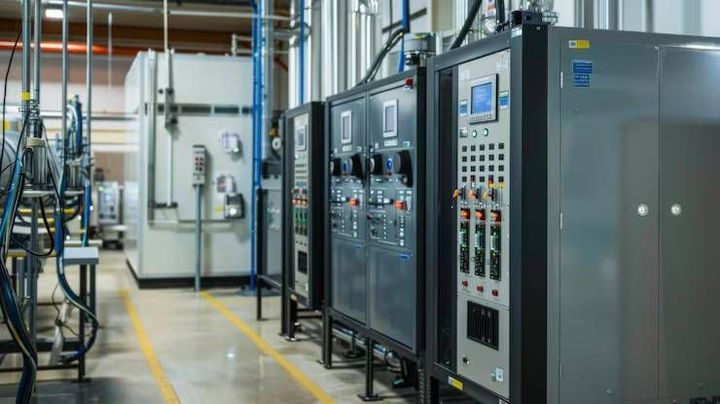
| Switchgear | Controls and isolates electrical circuits |
| Circuit breaker | Interrupts abnormal current |
| Distribution panel | Routes electricity to circuits |
| Generator | Provides electrical generation |
| Battery storage | Stores and supplies electrical energy |
| Protection relay | Detects electrical faults |
| Monitoring system | Tracks electrical conditions |
Industrial power systems can use different voltage levels depending on the facility and application. Transformers are commonly used to step voltage up or down as electricity moves between different sections of the network.
Importance
Reliable electrical infrastructure is important because many industrial processes depend on continuous and controlled electricity. A disturbance in voltage, frequency, or current can affect motors, automation equipment, production processes, computers, and other electrical loads.
Power systems also have an important safety function. Protection equipment is designed to identify abnormal conditions and disconnect affected sections when necessary. Grounding and bonding systems provide additional protection against electrical faults.
Industrial power systems affect several groups, including:
- Electrical engineers and technicians
- Facility and plant operators
- Equipment manufacturers
- Safety personnel
- Energy managers
- Grid operators
- Industrial organizations
Power quality is another important consideration. Voltage variations, harmonics, transients, and interruptions can influence sensitive electronic equipment and motor-driven systems. Monitoring these conditions can help organizations understand electrical performance and identify potential technical issues.
Energy management is also becoming more significant. Industrial facilities may analyze electricity consumption by production area, equipment group, or operating period. This information can support planning and help identify patterns in energy use.
Recent Updates
Industrial power systems are changing as electricity demand, digital technologies, and distributed energy resources develop. One major trend is the increased use of digital monitoring and control equipment.
Modern systems can collect measurements such as voltage, current, frequency, power factor, and energy consumption. Supervisory control and data acquisition systems, industrial communication networks, and electrical monitoring platforms can bring these measurements together for analysis.
Another development is the integration of renewable energy and battery storage. Industrial facilities may combine grid electricity with onsite solar generation and energy storage. The technical design must account for power flows, protection coordination, operating modes, and equipment ratings.
Microgrids are also receiving attention in industrial environments. A microgrid can combine local generation, storage, electrical loads, and control systems within a defined electrical network. Depending on its design, it may operate connected to a larger grid or in an isolated mode.
Artificial intelligence and data analytics are also being explored for electrical asset monitoring. These technologies can process large amounts of operational data and identify patterns that may require further engineering investigation.
Electrification is another important trend. Industrial processes that traditionally used direct combustion or other energy sources may increasingly use electrical equipment. This can change the electrical load profile of a facility and may require upgrades to transformers, switchgear, distribution systems, and grid connections.
Laws or Policies
Industrial electrical systems are subject to different technical standards, safety requirements, environmental rules, and grid regulations depending on the country, jurisdiction, facility type, and voltage level.
In the United States, the National Electrical Code provides widely used requirements for electrical installations, while OSHA establishes workplace electrical safety requirements. The National Fire Protection Association publishes standards and codes relevant to electrical and industrial safety.
Internationally, the International Electrotechnical Commission develops standards covering many areas of electrical and electronic technology. IEC standards are used in numerous countries, although national adoption and requirements can differ.
In India, industrial electrical installations are influenced by the Electricity Act and regulations issued by relevant authorities, together with applicable Central Electricity Authority requirements and technical standards. State-level electricity regulations and local requirements can also apply.
Organizations should verify the current requirements applicable to their location and facility. Electrical design and safety decisions should be based on the latest applicable regulations, standards, engineering specifications, and qualified professional guidance.
Tools and Resources
Several technical resources can help users understand and analyze industrial power systems.
Useful resources include:
- Electrical load calculations for estimating demand
- Power factor calculations for evaluating electrical loading
- Short-circuit analysis for studying fault conditions
- Protection coordination studies for reviewing protective-device operation
- Harmonic analysis for examining waveform distortion
- Energy monitoring platforms for tracking electrical consumption
- Single-line diagrams for representing electrical networks
A single-line diagram is particularly useful because it provides a simplified representation of the major electrical components and connections in a facility. Engineers can use these diagrams to understand power flow, protection arrangements, and equipment relationships.
Standards organizations and government electricity authorities are also important sources of technical information. Users should consult official publications rather than relying solely on informal summaries when interpreting regulatory requirements.
FAQs
What is an industrial power system?
An industrial power system is an electrical network used to generate, receive, distribute, control, monitor, and protect electricity within an industrial facility or network.
What equipment is used in industrial power systems?
Common equipment includes transformers, switchgear, circuit breakers, protective relays, distribution panels, cables, generators, motors, monitoring equipment, and energy storage systems.
Why is power quality important in industry?
Power quality can affect motors, electronic equipment, automation systems, and other electrical loads. Voltage disturbances and harmonics can influence equipment operation and electrical performance.
What is a microgrid?
A microgrid is a defined electrical network containing loads and potentially local generation and storage. It can operate with a larger grid and, when appropriately designed, may also operate independently.
What are electrical protection systems?
Electrical protection systems detect abnormal conditions such as short circuits, overloads, or other faults and can disconnect affected parts of an electrical network to limit damage and improve safety.
Conclusion
Industrial power systems provide the electrical foundation for many modern industrial activities. They combine generation or grid connections with transformers, distribution equipment, protection systems, monitoring technologies, and increasingly, renewable energy and storage.
Understanding these systems requires attention to electrical design, safety, power quality, equipment ratings, regulations, and operational requirements. As industrial facilities become more digital and electrically intensive, monitoring and control technologies are becoming increasingly important parts of power-system planning.
The exact design of an industrial power network depends on its electrical load, facility layout, operating conditions, grid connection, local regulations, and required levels of continuity. Engineering studies and applicable standards help determine appropriate system configurations.