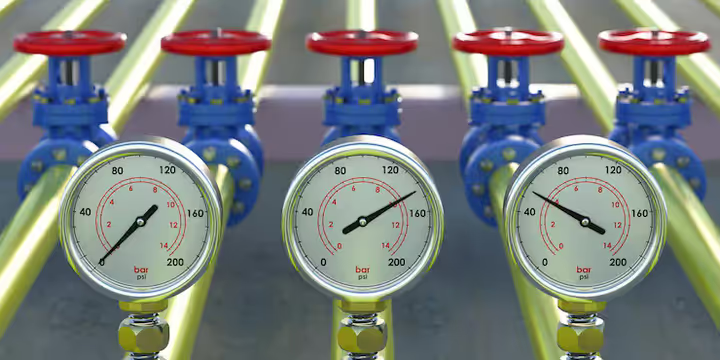
Gas Flow Meters Explained for Accurate Measurement and Control
Gas flow meters are instruments used to measure the amount of gas moving through a system over a specific period. They exist to provide reliable information about gas consumption, flow rate, and system performance in industrial, commercial, and scientific applications. Gases such as natural gas, air, oxygen, nitrogen, and process gases are commonly monitored using flow meters.
Historically, gas measurement was based on simple mechanical principles. As industries expanded and safety requirements increased, more precise and reliable measurement methods became necessary. Gas flow meters evolved to meet these needs by offering improved accuracy, repeatability, and control.
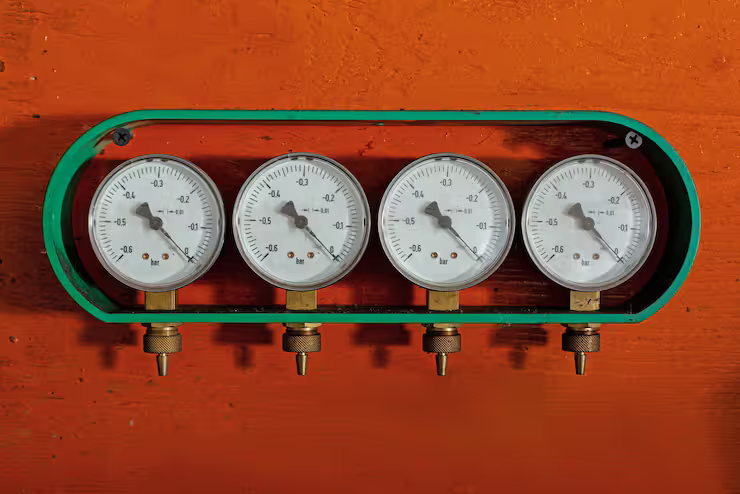
Today, gas flow meters are essential components in systems where precise gas measurement is required for efficiency, safety, quality control, and regulatory compliance. This guide explains how gas flow meters work and why they are important for accurate measurement and control.
Importance
Gas flow meters matter because gas behavior is affected by pressure, temperature, and composition. Small measurement errors can lead to safety risks, process inefficiencies, or inaccurate billing.
Why this topic matters today
Several modern factors have increased the importance of accurate gas flow measurement:
-
Growth of industrial automation
-
Increased focus on energy efficiency
-
Stricter safety and environmental standards
-
Expansion of gas-based manufacturing processes
Accurate gas flow measurement helps organizations maintain control over operations while reducing waste and risk.
Who gas flow meters affect
-
Industrial manufacturers
-
Energy and utility providers
-
Laboratories and research facilities
-
HVAC and building management teams
-
Process and safety engineers
Clear understanding of gas flow meters supports better system design and operation across these sectors.
How Gas Flow Meters Work
Gas flow meters measure flow using different physical principles depending on design. The goal is to convert gas movement into a readable signal.
Common measurement principles
-
Measuring pressure changes caused by flow
-
Detecting changes in velocity
-
Monitoring thermal properties of gas
-
Counting mechanical movement
The table below outlines common gas flow meter types and their working basis.
| Flow Meter Type | Measurement Principle |
|---|---|
| Differential pressure | Pressure drop |
| Thermal mass | Heat transfer |
| Ultrasonic | Sound waves |
| Turbine | Mechanical rotation |
| Coriolis | Mass flow detection |
Each type is suited to specific applications and operating conditions.
Types of Gas Flow Meters
Different gas flow meters are used depending on accuracy needs, gas type, and environment.
Differential pressure flow meters
These meters calculate flow based on pressure differences created by an obstruction in the flow path. They are widely used due to simplicity and reliability.
Thermal mass flow meters
Thermal meters measure how gas absorbs heat, making them useful for direct mass flow measurement without temperature and pressure compensation.
Ultrasonic gas flow meters
Ultrasonic meters use sound waves to measure flow velocity. They are often used where non-intrusive measurement is required.
Turbine gas flow meters
Turbine meters measure flow based on the rotation of a turbine placed in the gas stream. They are suitable for clean and dry gases.
Coriolis flow meters
Coriolis meters directly measure mass flow and density, offering high accuracy in demanding applications.
Applications of Gas Flow Meters
Gas flow meters are used across many industries.
Common application areas
-
Natural gas distribution
-
Chemical and petrochemical processing
-
Pharmaceutical manufacturing
-
Food and beverage processing
-
HVAC systems
-
Power generation
The table below shows application examples.
| Industry | Purpose of Measurement |
|---|---|
| Energy | Consumption monitoring |
| Manufacturing | Process control |
| Laboratories | Experimental accuracy |
| Utilities | Billing and compliance |
| Buildings | Efficiency management |
Accurate measurement supports stable and predictable operations.
Recent Updates
Gas flow measurement technology has continued to advance due to digitalization and automation.
Notable developments during 2024–2025
-
In March 2024, increased use of smart gas flow meters with digital communication features
-
In July 2024, improved sensor materials enhanced accuracy in harsh environments
-
By January 2025, wider adoption of remote monitoring and diagnostics
There has also been growing interest in flow meters that support energy efficiency and emissions tracking initiatives.
Factors Affecting Gas Flow Measurement Accuracy
Accurate gas flow measurement depends on several variables.
Key influencing factors
-
Gas pressure and temperature
-
Flow profile and pipe length
-
Gas composition
-
Installation orientation
-
Calibration practices
The table below summarizes common factors and their impact.
| Factor | Potential Impact |
|---|---|
| Temperature changes | Measurement drift |
| Pressure variation | Density effects |
| Poor installation | Flow disturbances |
| Gas impurities | Sensor wear |
| Calibration gaps | Reduced accuracy |
Managing these factors improves measurement reliability.
Role of Gas Flow Meters in Control Systems
Gas flow meters are often integrated with control systems to regulate gas supply automatically.
Control system benefits
-
Real-time monitoring
-
Automated flow adjustments
-
Improved safety response
-
Reduced manual intervention
This integration helps maintain consistent operating conditions and reduces human error.
Safety and Efficiency Considerations
Accurate gas flow measurement supports safety by detecting abnormal flow patterns.
Safety-related benefits
-
Leak detection
-
Overpressure prevention
-
Equipment protection
-
Compliance with safety standards
Efficiency improvements include reduced gas waste and optimized energy use.
Laws or Policies
Gas flow meters are subject to regulatory standards related to safety, accuracy, and environmental protection.
In India
-
Regulated under legal metrology and standards authorities
-
Energy and gas utilities must comply with calibration and accuracy norms
-
Safety regulations govern installation and operation
General regulatory considerations
-
Periodic calibration requirements
-
Certification of measurement devices
-
Compliance with environmental and safety laws
These policies ensure reliable and transparent gas measurement practices.
Tools and Resources
Various tools and resources help users understand and manage gas flow meters effectively.
Technical and planning tools
-
Flow rate calculators
-
Pipe sizing charts
-
Installation guidelines
Monitoring and maintenance tools
-
Digital diagnostics software
-
Calibration tracking systems
-
Performance monitoring dashboards
Educational resources
-
Engineering handbooks
-
Industry standards documentation
-
Technical training programs
These resources support informed use and maintenance rather than equipment promotion.
Comparing Gas Flow Meter Types
The table below provides a simplified comparison of common meter characteristics.
| Meter Type | Accuracy Level | Typical Use |
|---|---|---|
| Differential pressure | Moderate | General industry |
| Thermal mass | High | Process gases |
| Ultrasonic | High | Large pipelines |
| Turbine | Moderate | Clean gases |
| Coriolis | Very high | Critical processes |
Choosing the right type depends on application needs and operating conditions.
FAQs
What is a gas flow meter used for?
A gas flow meter is used to measure the amount or rate of gas flowing through a system for monitoring and control purposes.
How accurate are gas flow meters?
Accuracy varies by type, installation, and calibration. Proper selection and maintenance improve reliability.
Do gas flow meters require calibration?
Yes. Regular calibration helps maintain accuracy and compliance with standards.
Can one gas flow meter measure different gases?
Some meters can measure multiple gases, but performance depends on design and gas properties.
Are gas flow meters used in safety systems?
Yes. They are often part of safety and control systems to monitor abnormal flow conditions.
Final Thoughts
Gas flow meters play a vital role in accurate measurement and control across many industries. By providing reliable data on gas movement, they support safe operation, efficient processes, and regulatory compliance.
Understanding how gas flow meters work, their types, and influencing factors helps users make informed decisions about system design and maintenance. Rather than focusing on a single solution, effective gas measurement depends on matching the right technology to the application.