Flare Gas Recovery Systems Explained for Cleaner and Efficient Operations
Flare gas recovery systems are engineered solutions designed to capture gases that would otherwise be burned off through industrial flaring processes. Flaring is commonly used in oil, gas, and chemical operations to safely dispose of excess or unwanted gases generated during processing, maintenance, or emergency conditions. While flaring serves an important safety function, it also results in the loss of usable gas and the release of emissions.
Flare gas recovery systems exist to address this challenge by collecting flare gas, compressing it, and redirecting it back into usable systems such as fuel gas networks, power generation units, or processing streams. These systems do not eliminate flaring entirely but help reduce routine and continuous flaring where recovery is technically feasible.
As industries place greater emphasis on efficiency, emissions control, and responsible resource use, flare gas recovery systems have become an important part of modern gas management strategies.
Importance
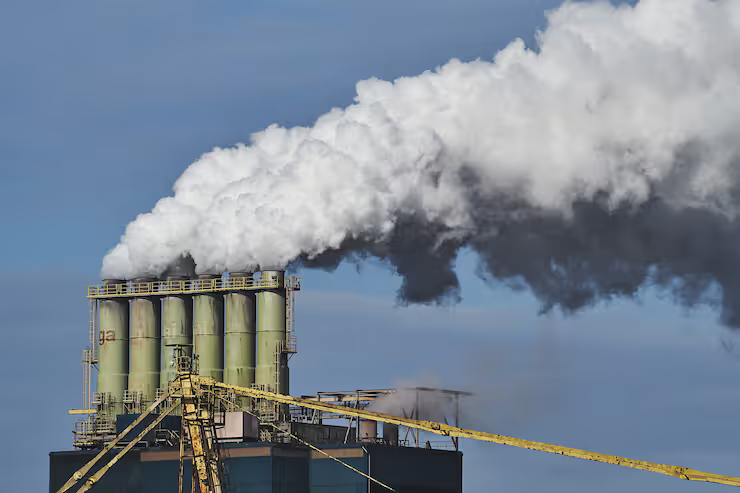
Flare gas recovery systems matter because flaring represents both an environmental concern and an operational inefficiency. Burning gas releases carbon dioxide and other byproducts into the atmosphere while discarding energy that could be reused.
Why this topic matters today
Several factors have increased attention on flare gas recovery:
-
Growing focus on emissions reduction and cleaner operations
-
Increased scrutiny of routine gas flaring practices
-
Rising energy efficiency and resource optimization goals
-
Pressure to improve operational sustainability
Recovering flare gas helps organizations reduce waste, improve fuel efficiency, and lower overall environmental impact without compromising safety.
Who flare gas recovery systems affect
-
Oil and gas producers and processors
-
Refinery and petrochemical operators
-
Power generation facilities
-
Environmental and compliance teams
-
Engineering and maintenance professionals
Understanding these systems helps stakeholders align operational goals with environmental and regulatory expectations.
What Is Flare Gas and Why It Is Flared
Flare gas is the excess gas released from industrial processes when it cannot be immediately used, stored, or transported. Flaring ensures safe disposal by controlled combustion.
Common reasons for flaring
-
Startup and shutdown operations
-
Equipment maintenance
-
Process upsets or pressure relief
-
Emergency safety situations
The table below outlines typical flaring scenarios.
| Situation | Reason for Flaring |
|---|---|
| Startup | System stabilization |
| Maintenance | Temporary gas release |
| Process upset | Pressure control |
| Emergency | Safety protection |
Flare gas recovery systems focus on reducing routine flaring while maintaining safety-critical flaring capability.
How Flare Gas Recovery Systems Work
Flare gas recovery systems capture gas from the flare header before it reaches the flare stack. The recovered gas is then conditioned and redirected for reuse.
Basic working process
-
Low-pressure flare gas is diverted from the flare line
-
Gas is compressed to usable pressure
-
Liquids and contaminants are separated
-
Recovered gas is routed to fuel, storage, or processing systems
The table below summarizes key system functions.
| Step | Purpose |
|---|---|
| Gas capture | Prevent flaring |
| Compression | Increase pressure |
| Separation | Remove liquids |
| Reuse | Improve efficiency |
This process allows facilities to recover usable energy while maintaining flare safety systems.
Key Components of a Flare Gas Recovery System
A flare gas recovery system integrates multiple components to operate safely and effectively.
Common system components
-
Flare gas compressor
-
Knock-out drum or separator
-
Control and monitoring systems
-
Safety valves and bypass lines
-
Piping and structural support
The table below explains component roles.
| Component | Function |
|---|---|
| Compressor | Pressurizes flare gas |
| Separator | Removes liquids |
| Controls | Regulate operation |
| Safety systems | Protect flare function |
| Piping | Direct gas flow |
Together, these components ensure stable and controlled gas recovery.
Types of Flare Gas Recovery Systems
Different system designs are used depending on gas composition, flow rate, and operating conditions.
Common system configurations
-
Compressor-based recovery systems
-
Modular or skid-mounted systems
-
Integrated refinery flare recovery units
-
Low-pressure recovery systems
The table below compares system types.
| System Type | Typical Use |
|---|---|
| Compressor-based | Continuous recovery |
| Modular skid | Flexible deployment |
| Integrated systems | Large facilities |
| Low-pressure units | Variable flows |
Selecting the appropriate type depends on operational requirements and flare characteristics.
Operational Benefits of Flare Gas Recovery
Flare gas recovery systems provide several operational advantages.
Key operational benefits
-
Reduced fuel gas consumption
-
Improved energy efficiency
-
Lower operating costs over time
-
Enhanced process stability
By reusing recovered gas, facilities can reduce reliance on external fuel sources.
Environmental and Efficiency Benefits
Environmental performance is a major driver for flare gas recovery adoption.
Environmental benefits
-
Reduced greenhouse gas emissions
-
Lower visible flaring activity
-
Improved air quality near facilities
Efficiency benefits
-
Better utilization of available energy
-
Reduced waste of valuable hydrocarbons
-
Support for sustainability goals
The table below summarizes these benefits.
| Benefit Area | Impact |
|---|---|
| Environment | Emissions reduction |
| Energy use | Improved efficiency |
| Operations | Waste minimization |
These outcomes support cleaner and more responsible operations.
Recent Updates
Flare gas recovery technology has continued to evolve alongside environmental and digital initiatives.
Notable developments during 2024–2025
-
In March 2024, increased deployment of compact flare gas recovery skids
-
In August 2024, improvements in compressor efficiency for low-pressure gas
-
By January 2025, broader integration of digital monitoring and automation
There has also been growing alignment between flare reduction targets and recovery system implementation across industrial sectors.
Integration with Existing Flare Systems
Flare gas recovery systems are designed to work alongside existing flare infrastructure.
Integration considerations
-
Maintaining emergency flaring capability
-
Ensuring automatic bypass during high-flow events
-
Coordinating with plant control systems
-
Managing variable gas flow rates
Proper integration ensures safety remains the highest priority.
Safety Role of Flare Gas Recovery Systems
Safety remains central to flare gas management.
Safety-focused features
-
Automatic bypass to flare stack
-
Pressure and flow monitoring
-
Emergency shutdown systems
-
Gas detection and alarms
These features ensure that gas recovery does not interfere with flare system reliability.
Applications of Flare Gas Recovery Systems
Flare gas recovery systems are used across multiple industries.
Common application areas
-
Oil and gas production facilities
-
Refineries and petrochemical plants
-
LNG processing units
-
Chemical manufacturing sites
The table below shows application examples.
| Industry | Purpose |
|---|---|
| Oil and gas | Reduce routine flaring |
| Refining | Recover fuel gas |
| Petrochemical | Improve efficiency |
| Energy | Emissions control |
Each application requires tailored system design and operation.
Laws or Policies
Flare gas recovery systems are influenced by environmental, safety, and industrial regulations.
In India
-
Environmental regulations govern emissions and flaring practices
-
Industrial safety laws apply to pressure equipment and gas systems
-
Reporting requirements for flaring volumes and emissions
General regulatory considerations
-
Emissions monitoring and reporting
-
Compliance with safety standards
-
Documentation of recovery performance
These policies encourage reduced flaring and responsible gas management.
Environmental Reporting and Compliance
Many organizations use flare gas recovery systems to support environmental reporting.
Reporting-related benefits
-
Improved emissions data accuracy
-
Demonstrated reduction in routine flaring
-
Support for sustainability reporting
Accurate data helps organizations meet internal and external reporting expectations.
Tools and Resources
Several tools and resources support understanding and operation of flare gas recovery systems.
Engineering and planning tools
-
Flare gas flow calculators
-
Compressor sizing tools
-
Process simulation software
Monitoring and operational resources
-
Digital monitoring dashboards
-
Emissions tracking systems
-
Maintenance planning tools
Educational resources
-
Industry technical manuals
-
Environmental compliance guides
-
Engineering training programs
These resources support informed implementation and operation.
Comparing Operations With and Without Gas Recovery
The table below illustrates a general comparison.
| Aspect | Without Recovery | With Recovery |
|---|---|---|
| Gas usage | Wasted | Reused |
| Emissions | Higher | Lower |
| Energy efficiency | Reduced | Improved |
| Operational value | Lost | Retained |
This comparison highlights the practical impact of gas recovery.
FAQs
What is a flare gas recovery system used for?
A flare gas recovery system captures gas that would otherwise be flared and redirects it for reuse.
Does flare gas recovery eliminate flaring completely?
No. Flaring is still required for safety during emergencies or high-flow events.
Where are flare gas recovery systems commonly installed?
They are used in oil and gas facilities, refineries, petrochemical plants, and energy operations.
Are flare gas recovery systems safe?
Yes. They are designed with safety systems that prioritize flare functionality and emergency response.
Do flare gas recovery systems reduce emissions?
They help reduce routine flaring and associated emissions by recovering usable gas.
Final Thoughts
Flare gas recovery systems play an important role in improving efficiency and reducing environmental impact in gas-handling industries. By capturing and reusing gas that would otherwise be flared, these systems support cleaner operations without compromising safety.
Understanding how flare gas recovery systems work, their components, and regulatory context helps organizations make informed decisions about gas management strategies. Rather than replacing flaring, recovery systems complement it by reducing routine gas loss and emissions.